.png?width=485&height=87&name=cf-logo-blue-transparent%20(1).png "cf-logo-blue-transparent (1)")
.png?width=1563&height=1563&name=Untitled%20design%20(38).png)




.png?width=1563&height=1563&name=Untitled%20design%20(33).png)


.png?width=1563&height=1563&name=Untitled%20design%20(34).png)







I’ve just wrapped up my time here at the World Economic Forum in Davos, and the atmosphere is unlike anything I’ve seen in my 15-year career in AI.
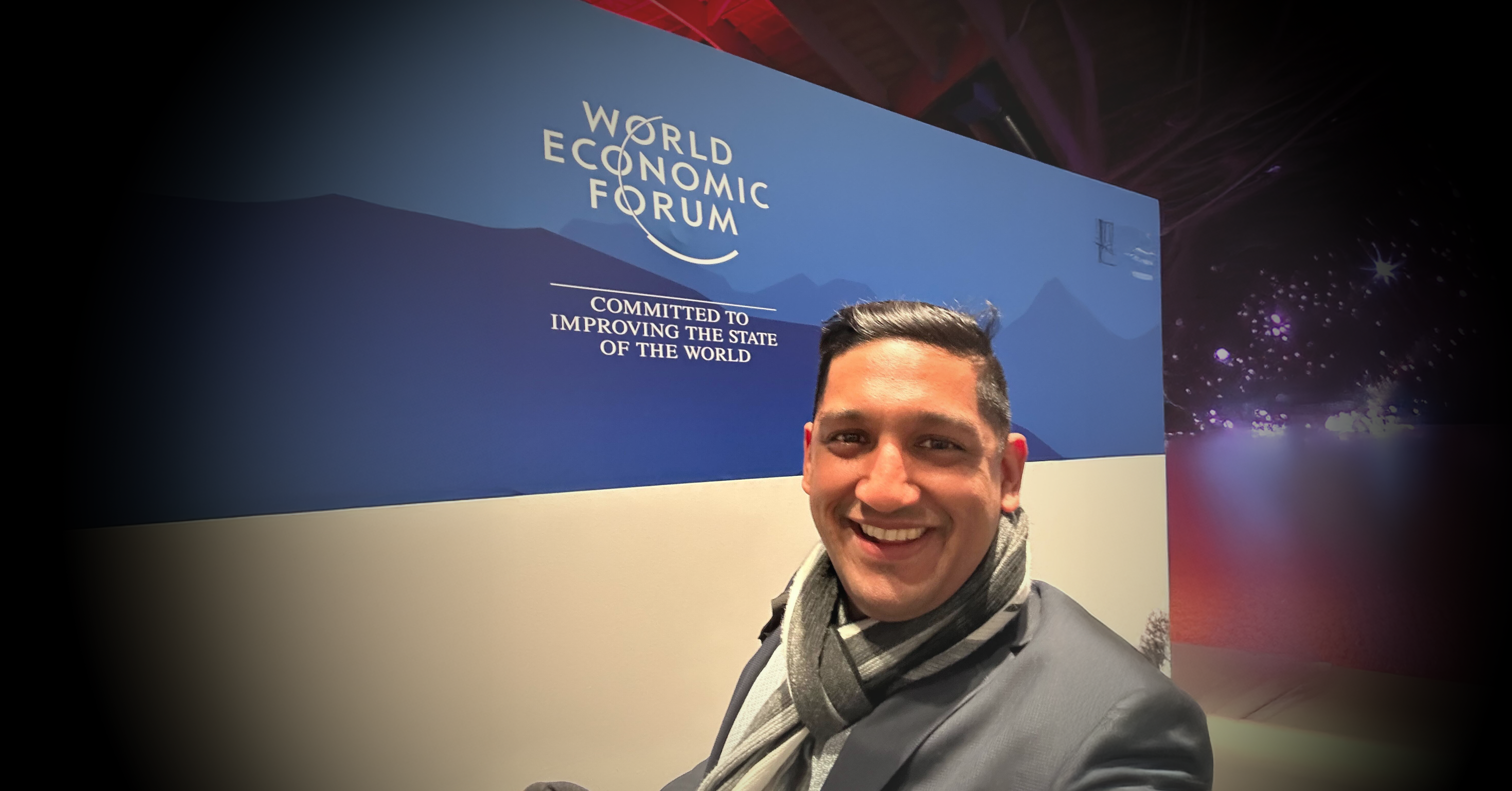
Usually, these summits are dominated by interest rates, geopolitics, and supply chains. But this year, 2026, there was a singular, universal language spoken in every room, from retail billionaires to healthcare titans: Artificial Intelligence.
It is no longer a "future" topic. It is the operating system of the global economy.
I spent the last few days in private roundtables and candid conversations with the architects of this revolution. Stepping out of the conference center and into the cold Swiss Alpine air, I recorded my immediate thoughts on where we are heading.
Expanding on this, here are my three critical takeaways for every builder, innovator, and leader navigating this new reality.
1. The "Model Wars" Are Over. Experimentation Won.
For a long time, the industry conversation felt tribal: Which model are you backing? Which ecosystem are you locked into?
That mindset is dead.
I sat in a private session with the Chairman of one of the world's leading AI labs, and the sentiment was refreshingly humble. The message from the very top is that everyone is experimenting. Even the creators of the world’s most powerful models are testing their competitors' tools. They are trying everything.
The winning strategy for 2026 isn’t loyalty to a single LLM; it’s agility. The companies that will win are the ones fostering a spirit of wild experimentation—testing different models for different use cases and refusing to let "standardization" kill curiosity.
2. The Shift from "Writer" to "Guide"
Perhaps the most profound shift I heard came from Dario Amodei, CEO of Anthropic. He shared that even within his own teams, the role of the engineer is fundamentally changing.
His engineers are telling him: "I’m not writing code anymore. I’m directing Claude to write the code".
We are witnessing an evolution from code generation to agent guidance. The value of a human worker is shifting from syntax, knowing where to put the semicolon, to judgment. We are becoming the directors of the movie rather than the camera operators.
This doesn't mean humans are obsolete; it means our taste, our judgment, and our ability to guide an outcome are now our most valuable assets.
3. Trust is the Hidden Infrastructure
While the excitement here is palpable, there is a shadow looming over the conversations with enterprise CEOs. Whether they run billion-dollar travel companies or global financial institutions, they all want the same thing: Autonomous Agents.
But they are terrified to unleash them.
The recurring question I heard was, "If I let this agent loose in my business, how can I trust it?"
We are at an inflection point. The technology for autonomy exists, but the infrastructure for trust is still being built. This is the barrier to entry. Until we can guarantee safety and reliability, enterprise autonomy will remain a pilot project rather than a production reality.
The CloudFactory Perspective: Building the world’s first AI Trust Platform
So, how do we navigate this shift? If the future belongs to those who experiment, guide, and trust, what does that practically look like for your operations?
At CloudFactory, we see this evolution requiring a new kind of infrastructure:
- Building Agentic Pipelines: To capitalize on the spirit of experimentation, you can't just consume models; you have to orchestrate them. We are focused on using our platform to build robust agentic pipelines. This allows you to swap models, test new agents, and iterate rapidly without rebuilding your entire operational stack.
- Enabling the "Guides": The shift from "writer" to "guide" isn't just a theory for us, it is how we operate. Our own teams are using these cutting-edge tools today to deliver results, and we are enabling our clients to do the same. We help you operationalize, steer, and guide agents effectively.
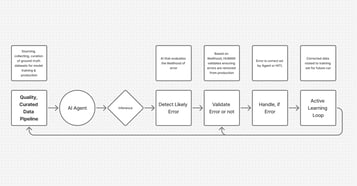
- The AI Safety Net: Trust isn't just about having a human in the loop; it’s about a comprehensive safety architecture. We are moving beyond simple review to Algorithmic + Human Oversight. By combining automated checks with expert human judgment, we create a true AI Safety Net. This is how you move from "fear of autonomy" to deploying agents with confidence.
Ready to Build?
The pace of change I witnessed in Davos is exhilarating, but it also demands a new level of operational rigor. As we shift from a world of code generation to one of agent guidance, you don’t have to navigate this evolution alone. Yo
If you are ready to build robust agentic pipelines and deploy a true AI Trust Platform for your business, we are ready to help.
Connect with our team at CloudFactory today, and let’s turn the trust gap into your competitive advantage.